Preparing the stove and work area
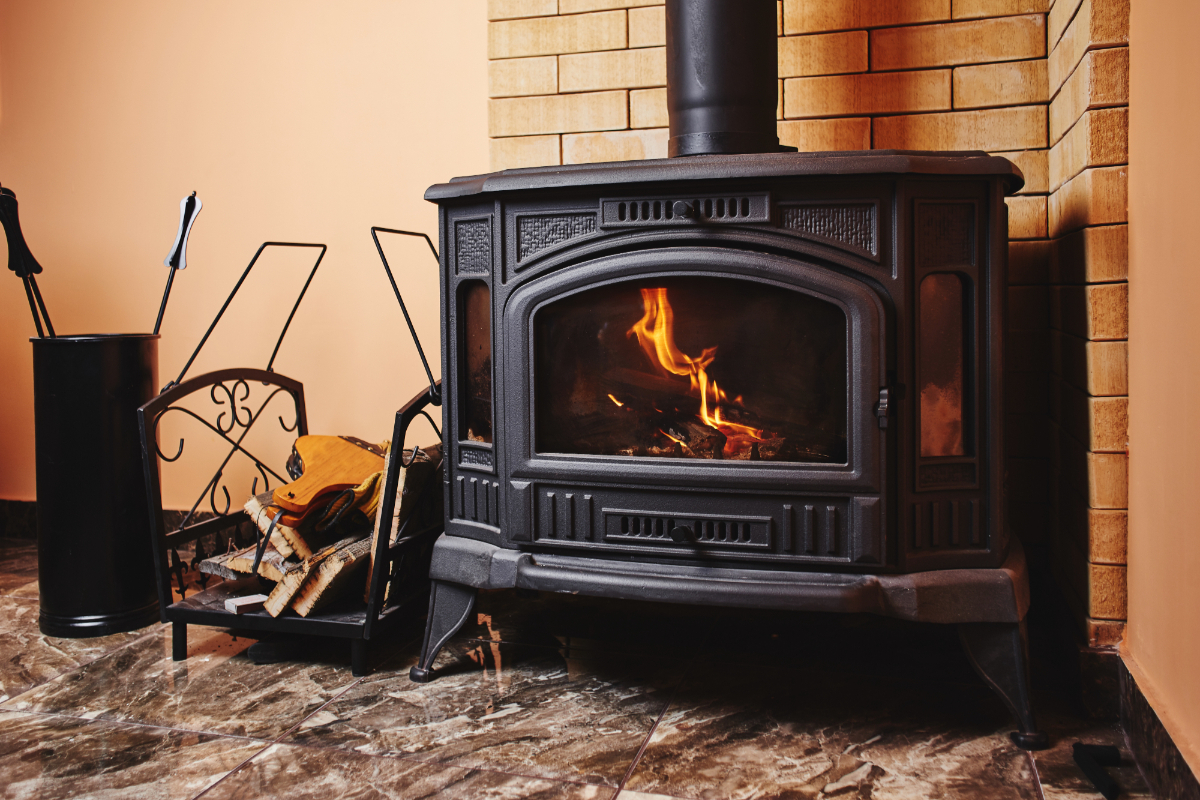
First, turn off the stove and let it cool. This is important since the glass won't be safe to clean if it's warm. Once the stove is cool, you should remove any leftover ash or unburned wood from inside the firebox. You can use a small shovel or brush to remove the loose ash and place it in a metal container or a bin bag.
You should move any furniture that could get damaged and put a dust sheet or old blanket on the floor to catch any soot and debris. You should also open a window to let in fresh air since it helps reduce the smell of soot and improves your ventilation.
You also need to cover the front of the stove with a cloth to protect the glass and frame while you clean the inside of the stove. If your wood burner has removable parts like baffle plates or firebricks, you should take them out while you work.
Before working on the chimney, it's best to place a sheet over the flue opening and cut a small hole in the sheet so that you can insert the chimney brush. This helps stop soot from falling into the room.
Cleaning the stove glass without scratches
Before cleaning the glass, you should always let the stove cool down fully; you can do this by checking the glass with the back of your hand. This step is crucial since cleaning hot glass can damage it and cause cracks.
When the glass has fully cooled down, you can wipe away any loose soot with a soft, dry cloth. You should avoid using any rough pads or brushes, since even small grains of ash can scratch the surface if it's pressed too firmly. Another way you can clean the glass is by using a damp newspaper dipped in a little bit of cool ash. All you need to do is scrunch up the paper, dip it in any leftover ash, and rub the glass in small circles to remove any stains. After that, wipe the glass with a damp cloth and then dry it with a grain-free cloth so that the surface is left clear and smooth.
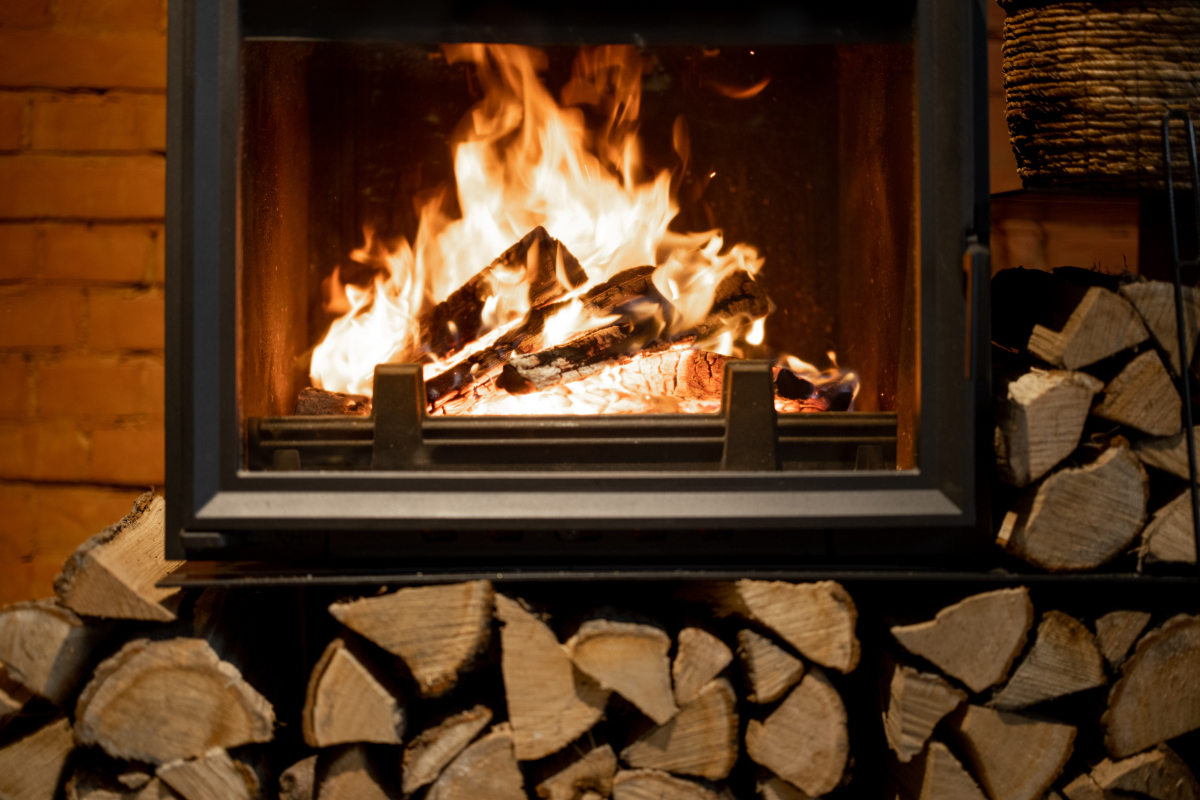
There are also glass cleaners you can use that are designed for wood burners. Ideally, you should look for products that say they are safe for ceramic or heat-resistant glass and are non-caustic. These cleaners are designed to remove tar, soot and brown staining without scratching or etching the glass.
You should avoid using general oven cleaners, bleach sprays or abrasive creams, since they can damage the seals, coatings and glass over time. You should spray the cleaner onto a cloth (not directly on the door) and keep it away from any painted or enamel parts of the stove.
Once the glass is clean, you can polish it with a dry cloth and wipe away any leftover cleaner. Never use blades, metal scrapers, wire wool or harsh chemicals on stove glass since they can leave permanent marks and weaken the door, which is a huge safety risk.
Cleaning the flue from the stove collar
Cleaning the flue is another important part of cleaning your wood burner since the flue helps smoke travel out of your home and reduces the risk of soot build-up. Before you begin, you should check that every part of the stove is cold to the touch. After this step, you can clear the space around the stove and place dust sheets on the floor to catch any soot that may escape while you work.
Then, remove the stove’s baffle plate or any internal parts that block your access to the flue opening. Once these parts are removed, you should be able to see the stove collar, which is the part where the flue pipe connects to the stove. Place a cloth or sheet over the stove opening and leave a small gap so that you can reach into the flue.
You should use a suitable flue brush that matches the size of your flue pipe. Then, gently push the brush into the flue and scrub in a steady up and down motion. It's important not to force the brush upwards since it can damage the liner. You should also remove the brush slowly to avoid pulling soot back into the room. Then, tap the rods gently outside once you're finished to shake off leftover soot. Once you've wiped around the stove collar with a soft cloth, you can then replace the parts you removed earlier.
How to sweep the chimney properly
When you sweep the chimney, it's important to choose the correct brush size. Chimneys may be lined or unlined, and each type needs a brush that fits well. A brush that's too small won't clean the sides properly, and a brush that's too big can get stuck. Most people use a set of flexible rods that join together so that the brush can reach all the way up the chimney without causing any damage.
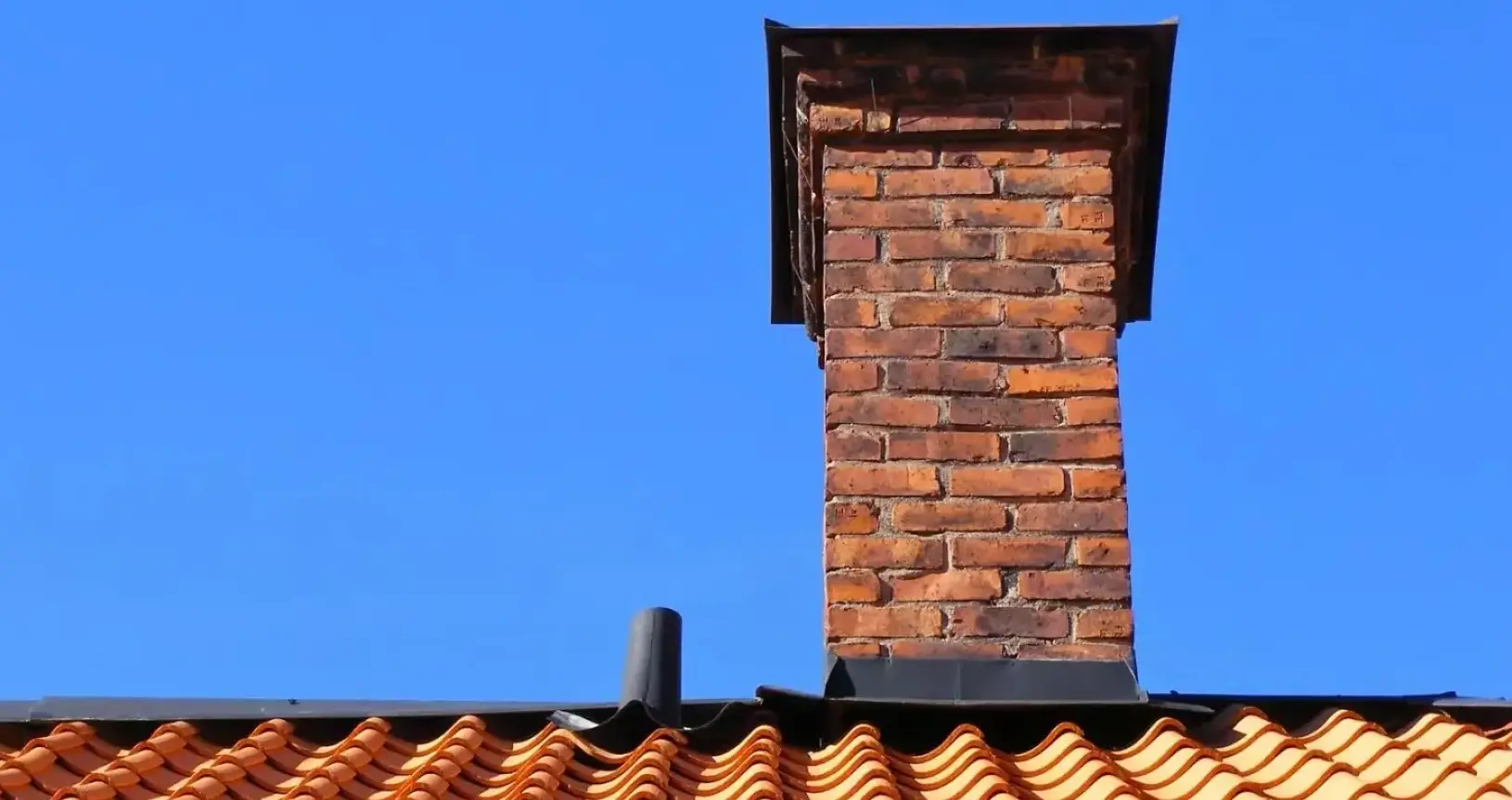
You should stand below the chimney opening (usually just above the stove collar) and push the brush upwards slowly. You can add rods as you go, but it's important to make sure that each one locks firmly in place. Moving the rods in short, brush-stroke movements can help scrub soot from the chimney walls.
When you reach the top, move the brush around gently to loosen any soot. Then, pull the brush down slowly so that you don't draw soot back into the room. Once the soot has settled, you can remove the sheet and sweep up the soot that has fallen into the stove. You should wipe the area with a soft cloth and check that all parts of the stove sit correctly before you close the door.
Fire Care Southwest Ltd provides safe and reliable wood burner installations across the UK. We can help you choose the right stove size for your home and ensure it's installed correctly. When it comes to heat and comfort, nothing is better than our wood burners.